
- Case Study
Gold Coast Bakery
How Waystation created $200k in cost savings while cutting RFP time in half
Gold Coast Bakery used Waystation AI to transform ingredient and packaging procurement—its largest cost category—into a data-driven margin lever, identifying more than $200,000 in annualized savings in three months and cutting RFP time by 50%.
$200k cost savings
annualized
11.7% saved
annualized per ingredient
50% faster
RFP cycles
Industry
- Food Manufacturing / Bakery
Scale
- 2 Plants
- 14,000+ locations served
- 500,000 lbs of flour/week
case study Timeline
- Value realized in <90 days
- (Payback in 30 days)
Waystation Capabilities Used:
- Email-native AI data capture
- Automated RFP setup & follow-ups
- Supplier document & compliance tracking
- Shared workspace for Procurement, QA & R&D
Key results
- $200k in annualized cost savings identified in the first 3 months
- 11.7% average per-ingredient cost reduction achieved through rebidding
Gold Coast Bakery
How Gold Coast Bakery Turned Its Biggest Cost into a Margin Lever
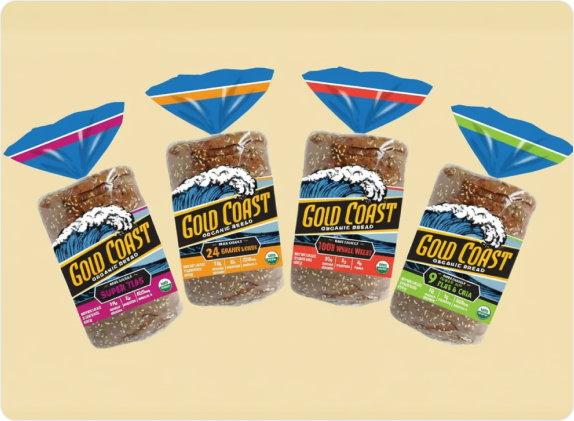
Gold Coast Bakery (“GCB”) is a world-class bakery supplying retailers and foodservice partners with a wide range of branded and private-label baked goods. Using 500,000 pounds of flour per week, GCB serves more than 14,000 locations and has satisfied more than 100 million customers. With an operation built on tight margins, consistency, and speed, the team treated procurement as mission critical rather than merely a back-office function.
For every SKU GCB ships, ingredients and packaging represent 30% to 45% of revenue. That scale made the sourcing team a quiet powerhouse inside the business, but it also meant that every missed quote, delayed specification, or scattered spreadsheet directly affected margin and supply reliability. As the company expanded its product mix and volumes, managing this high-stakes spend through fragmented emails, inconsistent supplier responses, and disconnected spreadsheets became harder to sustain.
Gold Coast Bakery turned to Waystation AI to bring structure and visibility to procurement, turning ingredients and packaging into a disciplined, data-driven margin lever.
“In just the first three months of using the product, Waystation helped us identify over $200,000 in annualized savings,” says Julie Xu, VP of Finance and Strategy at Gold Coast Bakery. “Waystation saved us enough in the first 30 days to pay for our entire annual contract.”
“Waystation has decreased the time to do an RFP by 50%.”

“If you care about margin, availability, and speed,
Waystation is a no-brainer.”

Julie Xu
VP of Finance and Strategy
Challenge: a high-stakes procurement process built on email
“With raw material costs driving 30 to 45% of revenue, manual processes weren’t just inefficient — they were constraining margin optimization, visibility into true landed cost, and speed to market. Waystation’s biggest utility for us is having more control over the levers on gross margin… We saved an average of 11.7% on each ingredient we ran through Waystation.” Julie says, “In just the first three months of using the product, Waystation helped us identify over $200,000 in annualized savings.
1. Fragmented data made cost control difficult
Pricing, quotes, specifications, and volumes lived in inboxes and spreadsheets, and QA documentation sat elsewhere, making it nearly impossible to see true costs or compare suppliers.
“All of our pricing lived in email and spreadsheets. If I wanted to understand what we’d actually paid for something, it meant digging through someone’s inbox. When pricing lives across inboxes and spreadsheets, you don’t really control costs, you just react to them.” says Julie.
2. Manual sourcing cycles created supply strain
Launching an RFP meant tracking down specs, volumes, certs, and contacts across multiple people. When supply ran short, the team scrambled.
“Every RFP felt like starting from zero. I was chasing specs, volumes, and old certs across several different people, and by the time I pulled it all together, we spent so much time chasing specs and certs that we were reacting to shortages instead of getting ahead of them.”
Julie Xu
VP of Finance and Strategy
3. Siloed systems slowed new product work
Procurement, QA, and R&D each held part of the puzzle, creating delays and repeated data requests, all slowing new product development.
Solution: Waystation transforms email chaos into a unified, automated procurement system
Waystation leverages AI to pull every quote, document, spec, and supplier email into one shared workspace. RFPs launch with complete data. Communication is structured automatically. Cross-team workflows finally run on the same real-time information.
“Before Waystation, every RFP felt like hunting for scattered pieces. Now the system pulls specs, volumes, and supplier info together before I even start.” Julie says, “Instead of digging through three systems, we have one dashboard we check constantly for pricing and supplier updates. When we reach out…no matter who you reach out to in the org, or even who they respond to here, it’s all being collected in one place.”
“It feels like someone finally turned the lights on in our procurement process.”
Julie Xu
VP of Finance and Strategy
Results: Procurement shifted from “bottleneck” to “margin lever.”
With Waystation in place, Gold Coast Bakery transformed procurement from a manual, spreadsheet-driven process into a coordinated, high-velocity engine for cost control and operational reliability. Centralizing all supplier communication, documents, and pricing history gave the team immediate visibility into true costs, eliminating the fragmentation that previously obscured margin opportunities. RFP cycles that once required days of chasing specs and certifications now start with complete, structured information—allowing sourcing decisions to happen faster and with greater confidence.
Reliability improved as bottlenecks disappeared: no more waiting on forwarded emails, no more missing terms or surprise price changes, and no more scattered QA documents creating potential compliance risk. Because this is a food manufacturer, key people are often on the production floor—not at desks—so critical supplier conversations routinely stalled while emails waited for attention. Cross-functional teams in procurement, QA, R&D, and finance now work from the same real-time data, accelerating new product development and reducing rework. What had been a reactive process became a controlled, proactive system that supports better pricing, stronger supplier relationships, and faster innovation.
Waystation gives GCB real-time visibility into true ingredient and packaging costs, turning its largest expense line into a controllable lever for margin improvement.
“Ingredients and packaging for us are anywhere between 30% and 45% of revenue for each SKU… Waystation’s biggest utility for us is having more control over the levers on gross margin…We saved 7 to 15% on each ingredient we ran through Waystation.” Julie says, “In just the first three months of using the product, Waystation helped us identify over $200,000 in annualized savings.”
“Since implementing it, Waystation has not only allowed us to start to track impact to margin and meaningfully see an expansion in gross margin, it also has allowed us to reduce virtually every bottleneck we had. When a process is contingent on a subset of people, every person becomes a bottleneck — and it allows us to eliminate that bottleneck almost entirely.”
Julie Xu
VP of Finance and Strategy
“We’ve noticed a shift in behavior with a lot of our vendors… they’re actually proactively coming back to us… they just ask, ‘What is the competitive bid that you need us to reach?’ They’re not even playing the game anymore… they’re kind of just like, ‘Tell us the price you need us to be at and we’ll let you know if we can beat it.” Julie says, “we have 2 levers, pricing and quality, and you help us with both.”
$200k cost savings
annualized
11.7% avg cost savings
annualized per ingredient
50% faster
RFP cycles